
Nagorikata
Empowering citizens through civic engagement and democratic participation
Program Details
About the Program
The Nagorikata: Civic Engagement Fund (CEF) is a donor-supported civic empowerment initiative in Bangladesh that has strengthened civil society participation in promoting good governance, human rights, and gender equality in alignment with Sustainable Development Goals (SDG 16 and SDG 5).The program has been funded by Swiss Agency for Development and Cooperation (SDC), Global Affairs Canada (GAC), the European Union, and a third party, and has been managed by the Fund Management Agency (FMA), led by GFA Consulting Group. The CEF seeks to foster inclusive governance, promote civic participation, and enhance transparency and accountability in public life.
The strategic framework of the CEF has been guided by a strong Theory of Change that has prioritized strengthening civil society knowledge systems, expanding outreach and partnerships, and promoting constructive engagement with government institutions. Through this approach, the program has worked toward four interconnected outcomes: expanding citizen mobilization and outreach, strengthening civil society networks and alliances, improving policy dialogue and cooperation between civil society and government actors, and enhancing the institutional capacity and knowledge base of civil society organizations. The program has operated across national, district, and local levels with a special focus on empowering women, youth, and marginalized communities to participate more effectively in civic, democratic, and policy processes.
Voices for Change: Inclusive Governance and Citizen Empowerment
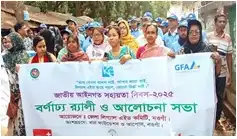
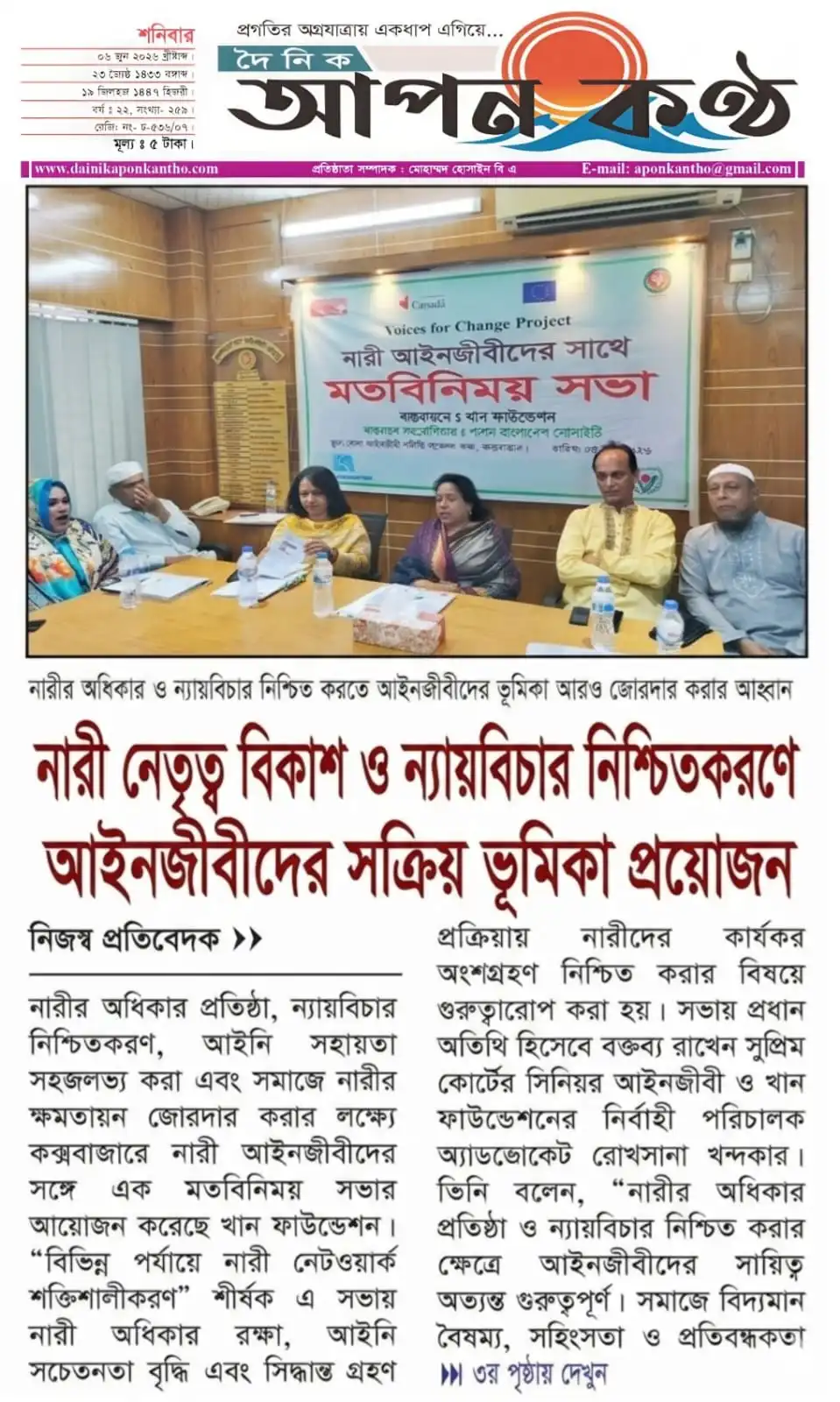
The "Voices for Change: Empowering Citizens for Inclusive Governance" project is a 30-month civic engagement initiative (December 2024 – June 2027) that has been implemented under the CEF framework. The project has been led by the Khan Foundation, formally known as the Abdul Momen Khan Memorial Foundation, in partnership with five local civil society organizations. The initiative has aimed to strengthen inclusive governance, citizen participation, and civil society leadership through strategic partnerships, policy advocacy, and community-driven engagement.
The project has been implemented in high-priority geographic areas across the Rajshahi and Chattogram divisions of Bangladesh, specifically in Rajshahi, Natore, Naogaon, Chattogram, and Cox's Bazar districts. These regions have been characterized by diverse ethnic communities, socio-economic inequalities, climate vulnerability, and governance challenges, making them critical sites for targeted civic engagement and social inclusion interventions.
Consortium Model
The project has adopted a strong consortium-based implementation model involving five experienced local civil society partners:
- Pulse Bangladesh Society
- Ensure Legal Support through Local Movement & Action (ELLMA)
- Access Towards Livelihood and Welfare organization (ALWO)
- Samata Nari Kallayan Sangstha (SNKS)
- Ancholic Polli Unnayan Sangstha (APUS)
This collaborative approach has strengthened local ownership, enhanced sustainability, and promoted knowledge sharing across organizations and communities. Through this partnership framework, the project has increased citizen voice, participation, representation, and leadership—particularly for women, youth, and marginalized populations—in local governance and development decision-making.
Expected Outcomes
The project has contributed to long-term democratic governance and social inclusion by advancing four major results:
- Enhanced engagement and mobilization of diverse citizen groups in democratic processes.
- Strengthened partnerships and coordination among civil society organizations. .
- Improved dialogue and policy engagement between citizens, civil society, and government institutions.
- Increased institutional capacity of civil society and community leaders to advocate for inclusive governance and social justice