
Overview
Building Democracy, Empowering Communities Since 1988
Key Milestones
KF Principles and Vision
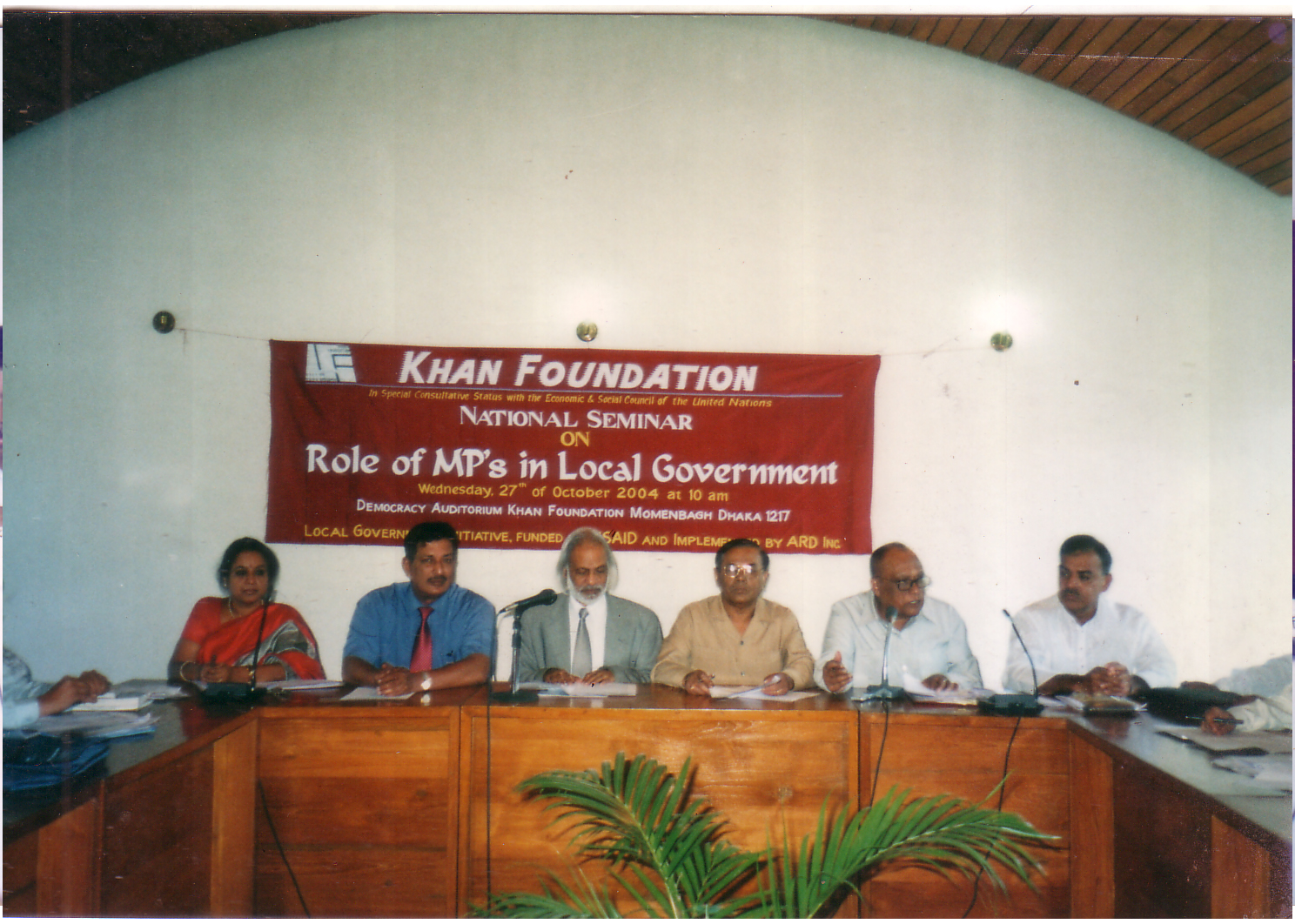
The Abdul Momen Khan Memorial Foundation, widely known as the Khan Foundation (KF), is a non-political, non-profit development organization established in memory of Abdul Momen Khan, who served as Cabinet Secretary and later Minister for Food of the Government of Bangladesh from 1977 to 1982. He was deeply respected as a philanthropist and social worker who believed in helping vulnerable people and improving society. Inspired by his values and lifelong dedication, KF was founded with a guiding belief: "Democracy for Development and Development for Democracy."
As a non-profit organization, KF works solely for public benefit. All its resources are reinvested into programs that promote democracy, human rights, good governance, and socio-economic development. KF is officially registered with the NGO Affairs Bureau (Registration No. 780, dated 04/12/1993), the Registrar of Joint Stock Companies and Firms (Registration No. C-528(41)/2002, dated 21/10/2002), and under the Microcredit Regulatory Authority (MRA), ensuring full compliance, transparency, and accountability in its operations.
KF's reputable work has earned it Special Consultative Status with the Economic and Social Council of the United Nations (ECOSOC), through which it regularly participates in advocacy initiatives and engages with UN agencies at national and international levels. This recognition reflects KF's credibility and commitment to advancing democratic governance, human rights, and inclusive development.
KF began its journey during one of the most difficult times in Bangladesh's history—the devastating floods of 1988. When millions of people lost their homes and livelihoods, KF stepped forward with emergency relief, providing food, shelter, and essential support. This early intervention helped many families survive and begin rebuilding their lives.
However, while working closely with affected communities, KF realized that disasters were only part of a broader structural challenge. Many families were already trapped in poverty, facing limited access to education, gender inequality, weak governance systems, and social injustice. KF understood that emergency relief alone could not address these deeper and systemic issues.
Over time, KF transitioned from short-term humanitarian assistance to long-term development and rights-based programming. With nearly four decades of experience, KF now works in areas such as democracy and good governance, gender equality, legal empowerment, advocacy, child rights, environmental justice, and socio-economic development. The organization focuses on creating sustainable change by strengthening institutions, enhancing citizen participation, improving livelihood opportunities, and promoting social accountability.
KF has also established and operates several networks and forums at local and national levels, including the UP Members Forum, Forum for CSOs, Women Lawyers' Network, and District Court Lawyers' Group. These platforms play a vital role in implementing project activities, promoting policy dialogue, and strengthening grassroots governance and legal awareness.
Through its Women Lawyers' Network and national congresses, KF has significantly contributed to the political and economic empowerment of women by providing training, leadership development, and capacity-building opportunities to women lawyers across the country. These efforts enhance women's participation in governance, access to justice, and representation in decision-making processes.
Given its extensive experience in local government strengthening, KF maintains strategic linkages with the Municipal Association of Bangladesh (MAB) and the Bangladesh Union Parishad Forum (BUPF). Furthermore, KF has signed a Memorandum of Understanding (MoU) with the National Institute of Local Government (NILG) to support institutional capacity building and governance reforms.
KF is also an active member of the Bangladesh Shishu Adhikar Forum (BSAF), a coalition of civil society organizations working to advance child rights in Bangladesh. Additionally, KF's Executive Director serves as an Executive Committee member of the Bangladesh Environmental Lawyers Association (BELA) and as Treasurer of Ain o Salish Kendra (ASK), ensuring strong collaboration and coordination with leading human rights and legal advocacy organizations.
KF places special importance on supporting women, children, and marginalized communities, recognizing that inclusive governance and equitable access to opportunities are essential for sustainable development. The foundation believes that lasting development is only possible when institutions are transparent, accountable, participatory, and responsive to citizens' needs.
Today, KF continues its mission as a trusted and credible development organization committed to building a just, inclusive, and resilient society—where democracy, development, human rights, and dignity advance together.
Mission
To strengthen and sustain genuine representative democracy in Bangladesh, starting from the grassroots level of local government up to the central government, while promoting a strong and inclusive democratic culture throughout the country.
To improve the living conditions of disadvantaged communities—especially women, children, and people living in poverty—by implementing effective social and economic development programs that create real and lasting change.
To support the mission of the United Nations globally and actively contribute to achieving the Sustainable Development Goals (SDGs) in Bangladesh within the agreed timeframe set by the United Nations.
Vision
The vision of the Khan Foundation for the next millennium is firm in its goals yet quite flexible in its approach. For the past decade, the Khan Foundation has been working toward a vision of Bangladesh where liberal democracy flourishes and is sustained alongside economic development; where basic human rights and dignity are honored; and where millions of underprivileged people no longer suffer under the yoke of poverty but instead achieve a lifestyle that is simple yet not impoverished, peaceful yet not extravagant, and decent yet not overly materialistic.
Goal
The overall goal of Khan Foundation is to contribute to building a just, democratic, and inclusive society where all people—especially women, youth, and marginalized communities—can live with dignity, enjoy equal opportunities, and participate fully in social, economic, and political life.
Core Values
Liberal Democracy
Strengthening and sustaining liberal democracy where people's voices are respected, participation is encouraged, and governance is accountable and transparent.
Human Rights & Dignity
Upholding the fundamental rights and dignity of every individual, regardless of gender, background, or social status.
Inclusive Development
Supporting economic growth that benefits everyone—especially disadvantaged and underprivileged communities—so that no one is left behind.
Equity & Social Justice
Promoting fairness and equal opportunities for all, particularly marginalized and vulnerable groups.
Poverty Reduction
Working to ensure that people move beyond poverty and live lives that are simple but secure, peaceful yet dignified, and decent without excessive materialism.
Sustainable Development
Valuing development that is not only economically strong but also socially responsible and sustainable for future generations.
Flexibility with Determination
Remaining firm in long-term goals while being adaptable in strategies and approaches to respond to changing realities.
Transparency & Accountability
Ensuring full compliance, transparency, and accountability in all operations and programs for the communities we serve.
Main Working Areas
Join KF in Building a Better Bangladesh
Be part of our mission to strengthen democracy and empower communities across Bangladesh.
GET INVOLVED