Projects
Loading Project...
Please wait while we load the project details

Please wait while we load the project details
Reviewing Progress and Strengthening Action for Population, Health, Gender Equality and Reproductive Rights
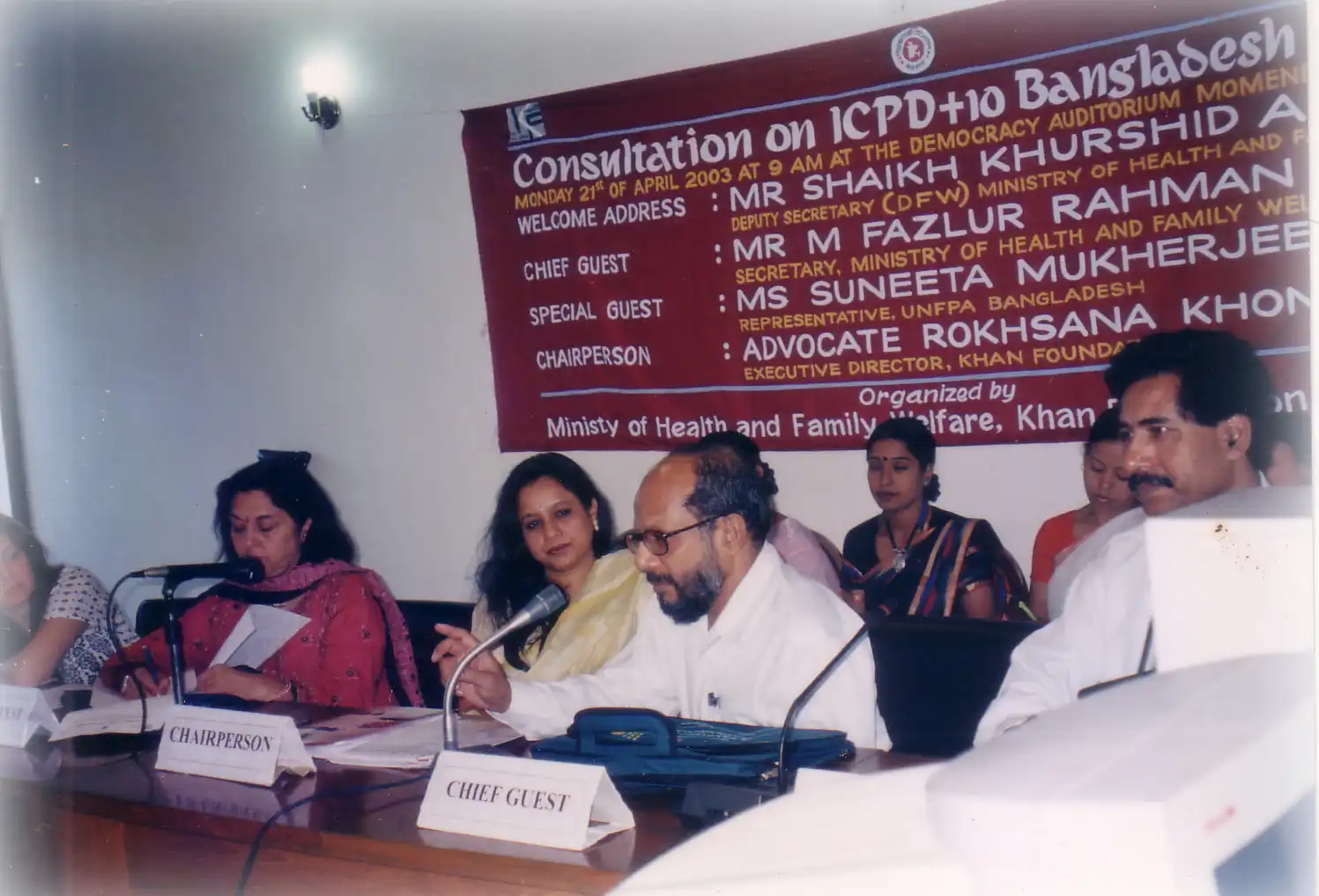
ICPD+10: Bangladesh Perspective was an initiative of Khan Foundation to assess Bangladesh’s
progress, challenges, and future priorities in implementing the International Conference on
Population and Development (ICPD) Programme of Action (PoA). The report reviewed
achievements in reproductive health, women empowerment, education, HIV/AIDS prevention,
poverty reduction, and population development after ten years of the ICPD commitment.
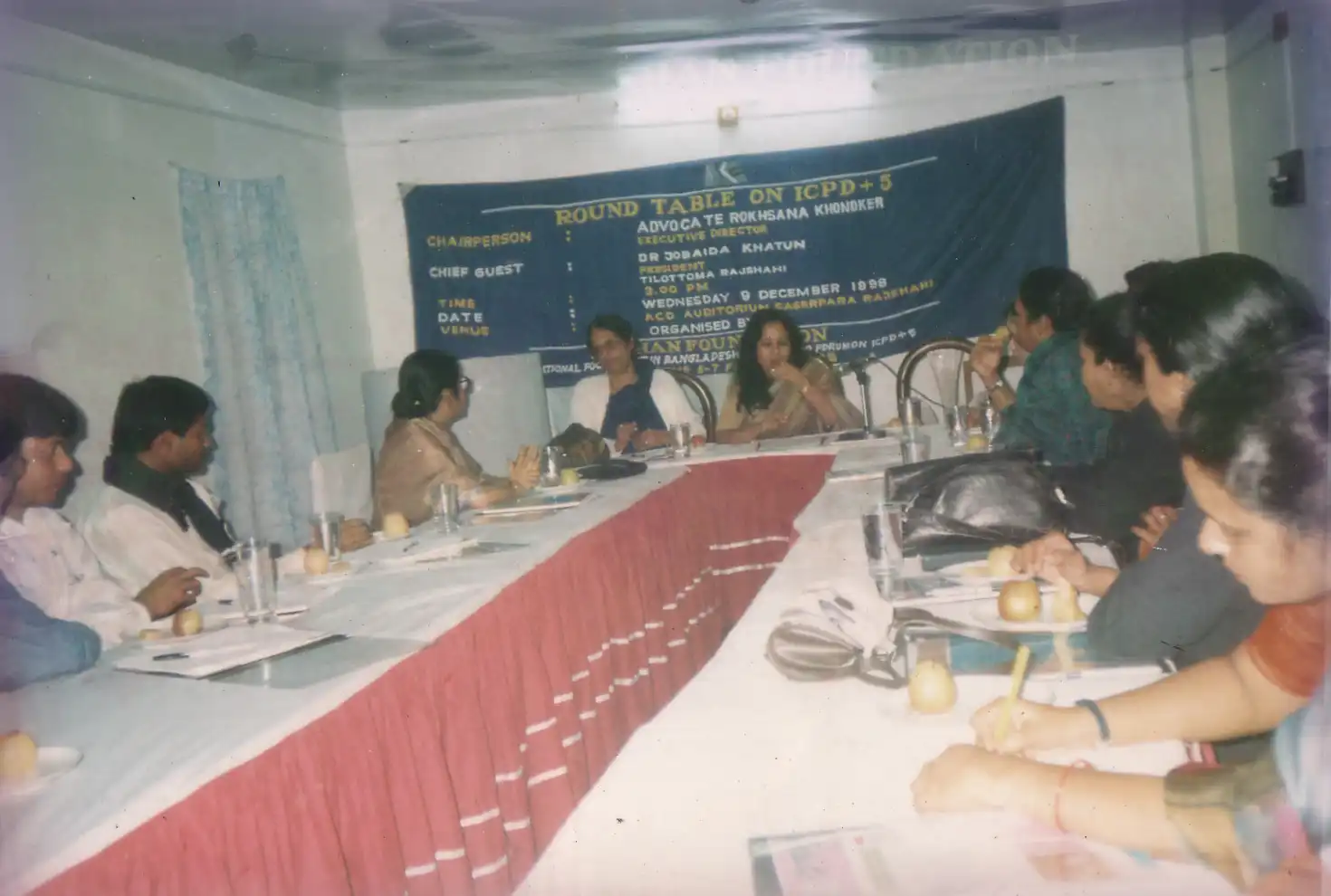
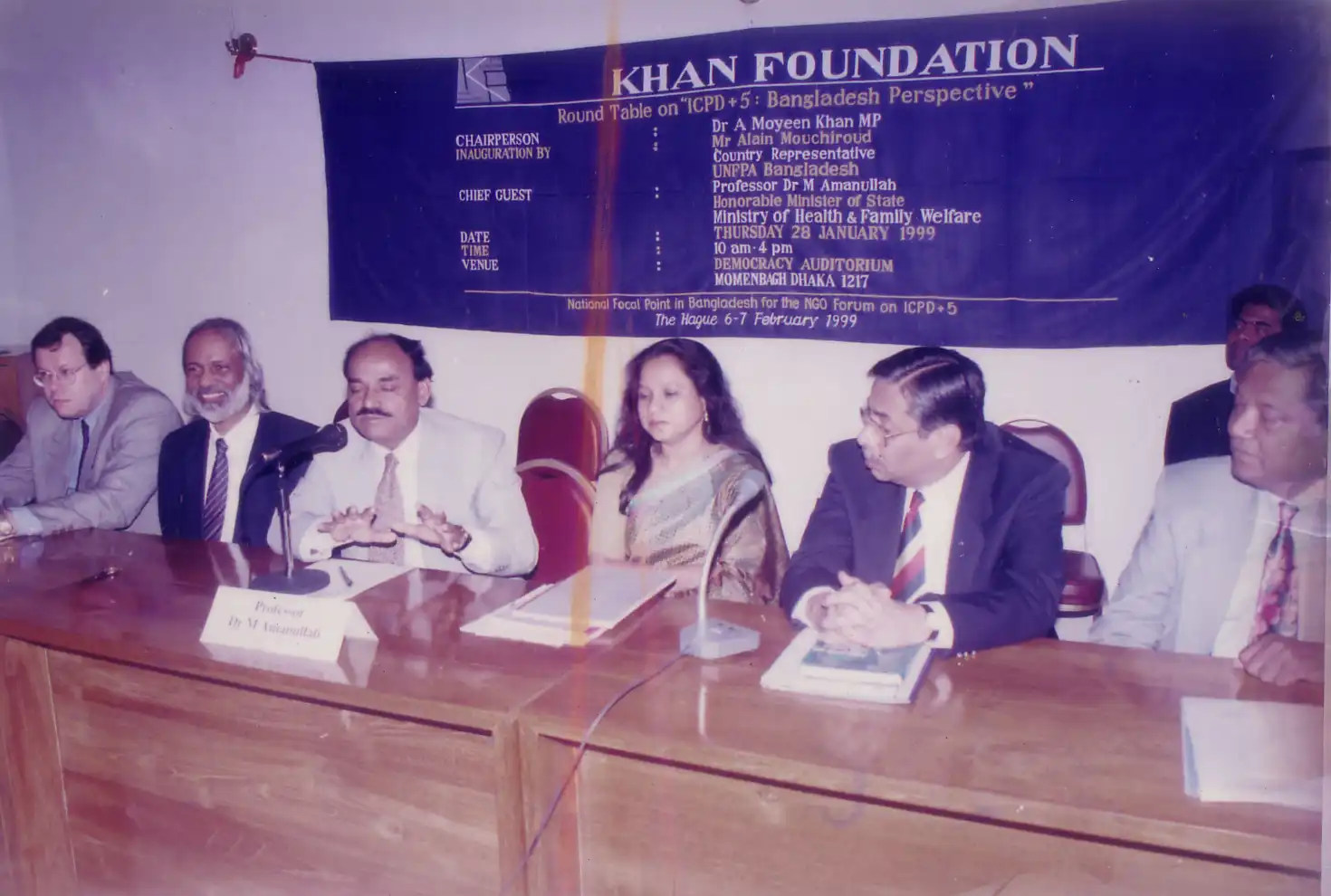
Khan Foundation organized five divisional workshops and one national seminar where
government officials, ministers, MPs, grassroots representatives, civil society members, and
NGOs discussed successes, failures, and recommendations for implementing the ICPD PoA.
Evaluating achievements, identifying challenges, and developing future strategies
Assess achievements of Bangladesh in implementing the ICPD Programme of Action.
Identify challenges, constraints, and opportunities.
Develop lessons learned and future strategies.
Increase awareness about ICPD among policymakers, civil society, and communities.
Promote reproductive health rights and women empowerment.
Strengthen linkage between ICPD goals and Millennium Development Goals (MDGs).
The project aimed to review Bangladesh’s progress in implementing ICPD commitments, identify gaps, increase awareness among stakeholders, and develop recommendations for achieving population, health, and development goals.
Improving health, education, gender equality and population development outcomes
Increased awareness about ICPD Programme of Action among stakeholders.
Identified gaps between policy formulation and implementation.
Recommended stronger community awareness initiatives.
Recommended increased participation of NGOs, private sector, and civil society.
Promoted adolescent reproductive health education.
Recommended stronger women empowerment and education initiatives.
Encouraged stronger action against HIV/AIDS and reproductive health challenges.
The project generated recommendations to improve implementation of ICPD goals through awareness building, policy improvement, stakeholder coordination, and expanded health and education services.
Strengthening reproductive health, gender equality and population development initiatives
1. Policy Advocacy
o Supported implementation of ICPD Programme of Action.
o Promoted integration of population issues into development policies.
2. Reproductive Health Promotion
o Supported awareness on reproductive health rights.
o Promoted family planning and safe motherhood initiatives.
3. Women Empowerment
o Advocated gender equality and elimination of discrimination against women.
o Supported women’s participation in development processes.
4. Adolescent Health Awareness
o Promoted reproductive health education among adolescents.
5. HIV/AIDS Prevention
o Supported awareness programs and prevention strategies.
The intervention focused on policy advocacy, stakeholder engagement, awareness generation, reproductive health promotion, women empowerment, and strengthening implementation mechanisms for ICPD commitments.
Engaging stakeholders for ICPD+10 review and recommendations
Organized five divisional workshops:
o Chittagong
o Khulna
o Rajshahi
o Hobiganj
o Barisal
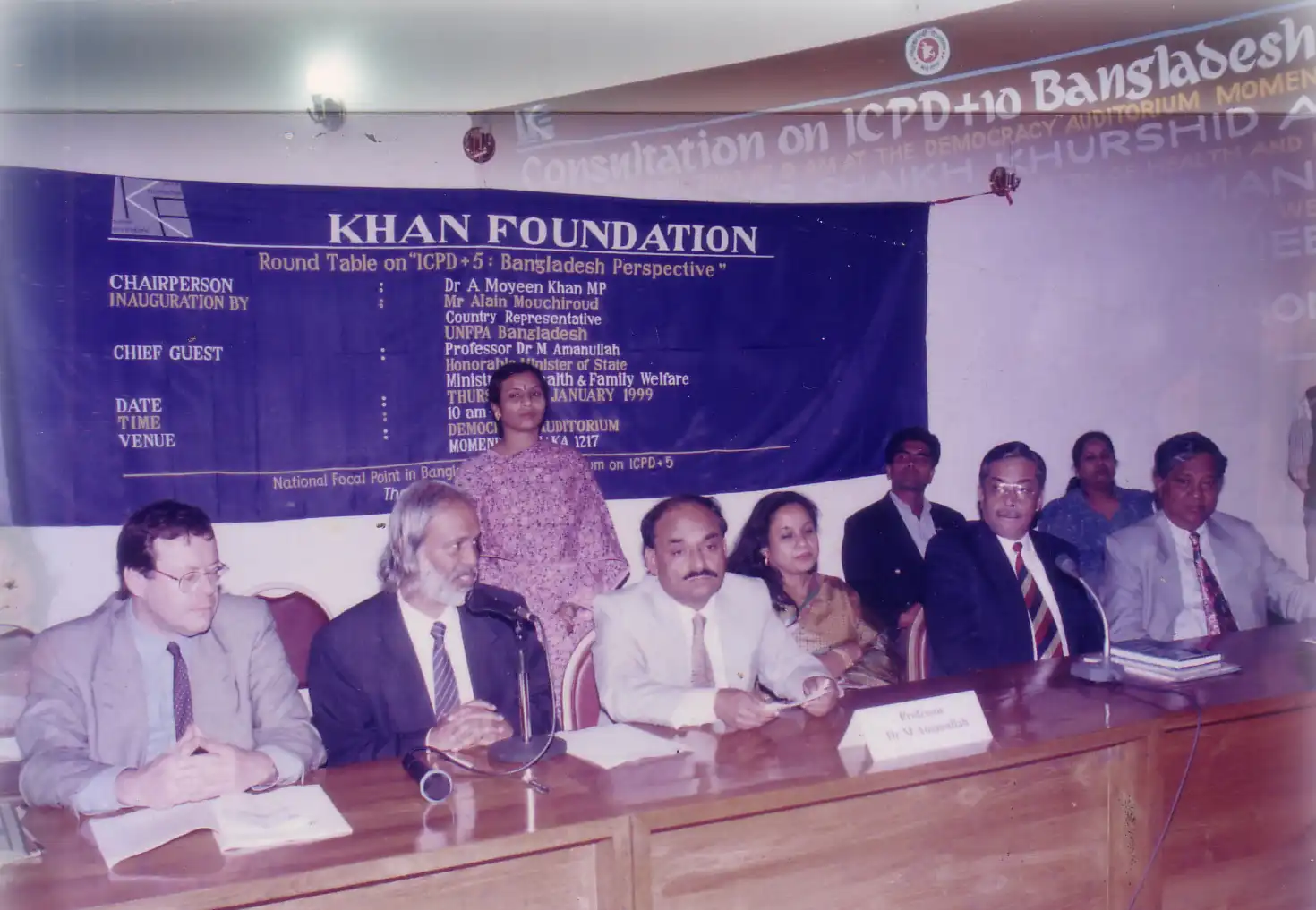
Organized one national seminar on ICPD+10: Bangladesh Perspective.
Conducted discussions involving:
o Government officials
o Ministers
o MPs
o NGO representatives
o Civil society members
o Social workers
o Journalists
o Local government representatives
Conducted open and group discussions on:
o Reproductive health
o Women empowerment
o HIV/AIDS prevention
o Education
o Population management
The project conducted divisional workshops and a national seminar to discuss Bangladesh’s achievements and remaining challenges in population development, reproductive health, gender equality, and human rights.
Supporting inclusive population and reproductive health development
Direct Beneficiaries:
• Government policymakers.
• Local government representatives.
• NGOs.
• Civil society organizations.
• Health and development professionals.
• Journalists and social workers.
Indirect Beneficiaries:
• Women and girls.
• Adolescents requiring reproductive health information.
• Children.
• Poor and vulnerable communities.
• Communities affected by HIV/AIDS and health inequalities.
The project benefited stakeholders involved in population development while indirectly supporting women, children, adolescents, and disadvantaged communities through improved awareness, advocacy, and service recommendations.