Projects
Loading Project...
Please wait while we load the project details

Please wait while we load the project details
Strengthening Gender-Sensitive Justice Through Judicial Education and Awareness
The Justice System Education Initiative on Gender Equality Issues was a capacity-building and
awareness program led by Khan Foundation to promote gender equality within the justice
system. The initiative focused on improving the understanding of judges, public prosecutors
(PPs), assistant public prosecutors (APPs), lawyers, and other justice actors regarding women’s
rights, gender-based violence, legal barriers, and fair judicial practices.
Building capacity of justice-sector professionals to ensure equal access to justice
To raise awareness and build capacity among judges and justice-sector professionals on gender equality issues.
To identify loopholes in laws related to violence against women and children.
To improve gender-sensitive decision-making in courts.
To establish a sensitive courtroom environment.
To promote equal rights of women in all spheres of life.
To strengthen awareness about women’s legal rights and responsibilities.
The initiative aimed to sensitize judges and legal professionals, improve judicial responses to gender issues, identify legal gaps related to violence against women and children, and encourage a more gender-responsive justice system.
Strengthening awareness, collaboration, and legal reform recommendations
Increased awareness among judges, lawyers, and prosecutors regarding gender justice.
Improved understanding of women’s barriers in accessing justice.
Recommendations developed for:
Independent investigation systems.
Independent prosecution systems.
Witness protection mechanisms.
Timely court procedures.
Promoted gender-sensitive courtroom environments.
Encouraged collaboration among judges, PPs, APPs, lawyers, and law enforcement agencies.
The initiative enhanced understanding among justice-sector stakeholders regarding gender equality, highlighted weaknesses in existing legal processes, and generated recommendations for improving justice delivery for women and children.
Capacity development, legal awareness, and institutional improvement
1. Judicial Capacity Building
Training judges and legal professionals on gender-sensitive justice.
2. Legal Awareness Promotion
Increasing awareness of women’s rights and legal protections.
3. Legal System Review
Identifying gaps in laws related to violence against women and children.
4. Stakeholder Coordination
Connecting judges, prosecutors, lawyers, NGOs, and civil society.
5. Policy Advocacy
Advocating reforms such as independent investigation and prosecution systems.
The project used education, dialogue, training, and advocacy interventions to improve the justice system’s ability to address gender-based discrimination and violence.
Creating awareness and improving justice delivery through collaboration
1. Justice System Education Workshops
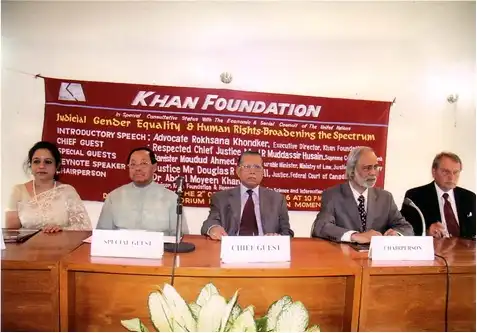
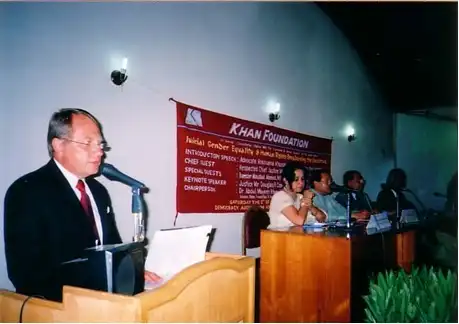
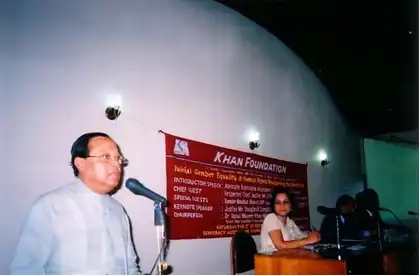
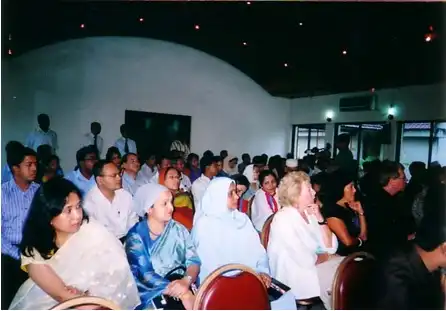
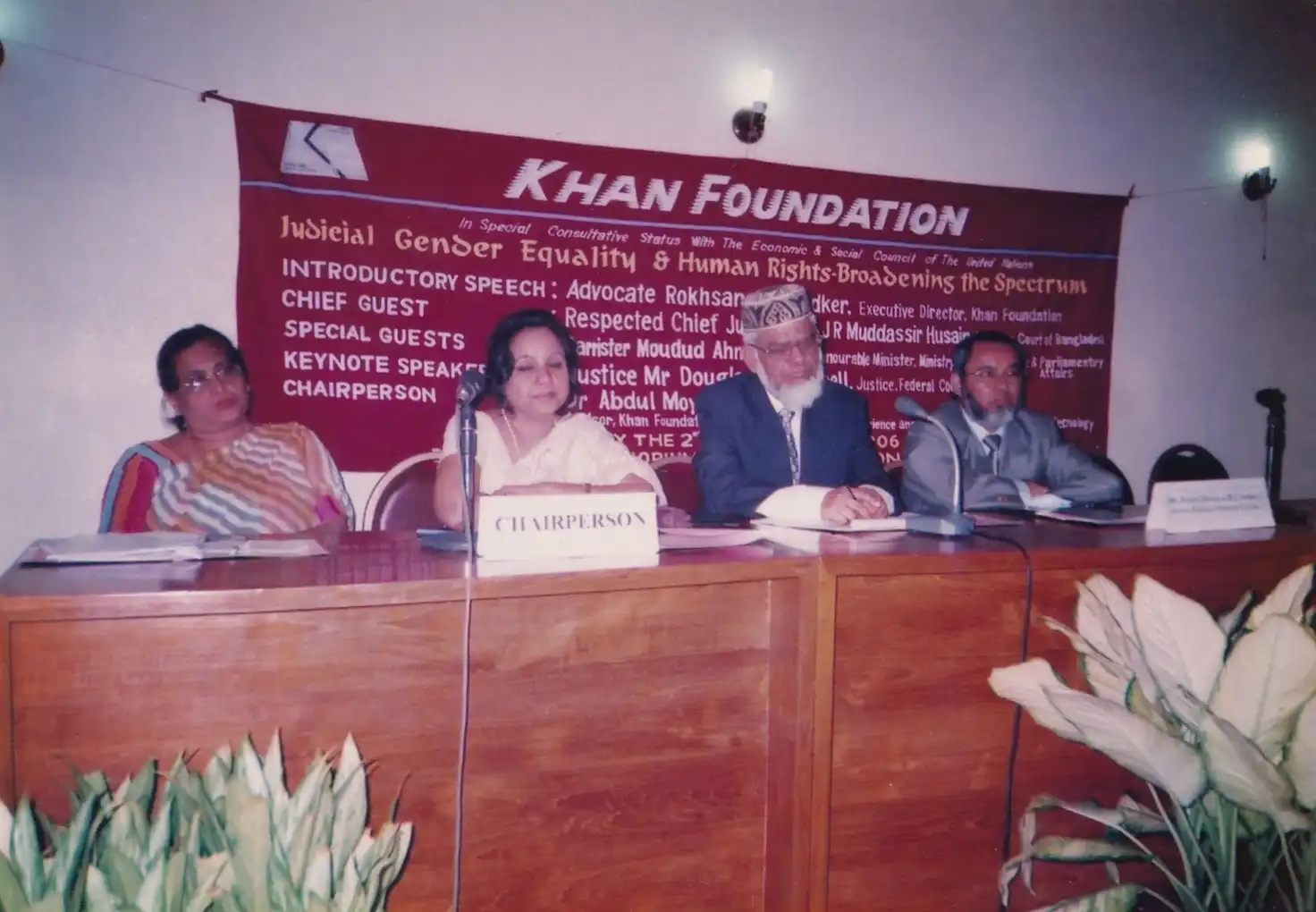
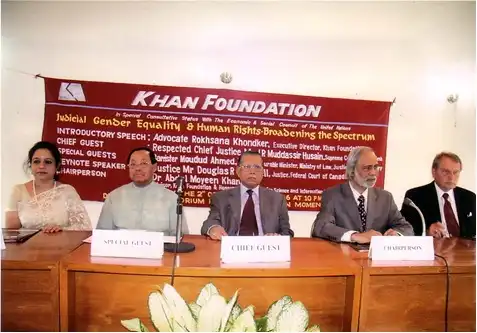
Conducted workshops on gender equality issues involving judges, lawyers, PPs, APPs, NGOs, and journalists.
2. Dialogue with Supreme Court Justices
Organized dialogue sessions with judges of the Appellate and High Court Divisions to discuss gender equality in judicial procedures.
3. Two-Day Training Workshops
Conducted training programs for judges and judges of Nari O Shishu Nirjaton Daman Tribunal.
4. Working Sessions
Gender Equality and Women’s Rights
Understanding Women’s Reality
Gender Justice and Judicial Decision Making
Sharing judicial experiences
5. Follow-up National Seminar
Reviewed training effectiveness through questionnaires and case judgment analysis.
The project conducted workshops, dialogues, training sessions, and follow-up seminars involving judges, lawyers, prosecutors, NGOs, journalists, and government representatives to discuss gender equality and justice-related challenges.
Empowering justice actors to better serve vulnerable groups
Direct Beneficiaries:
Judges of Supreme Court and subordinate courts.
Judges of Nari O Shishu Nirjaton Daman Tribunal.
Public Prosecutors (PPs).
Assistant Public Prosecutors (APPs).
Women lawyers.
Government representatives.
NGOs and journalists.
Indirect Beneficiaries:
Women affected by discrimination and violence.
Children facing abuse and legal vulnerability.
Communities seeking improved justice services.
The direct beneficiaries were justice-sector professionals who participated in training and dialogue activities. Indirect beneficiaries were women and children affected by discrimination, violence, and barriers to justice.